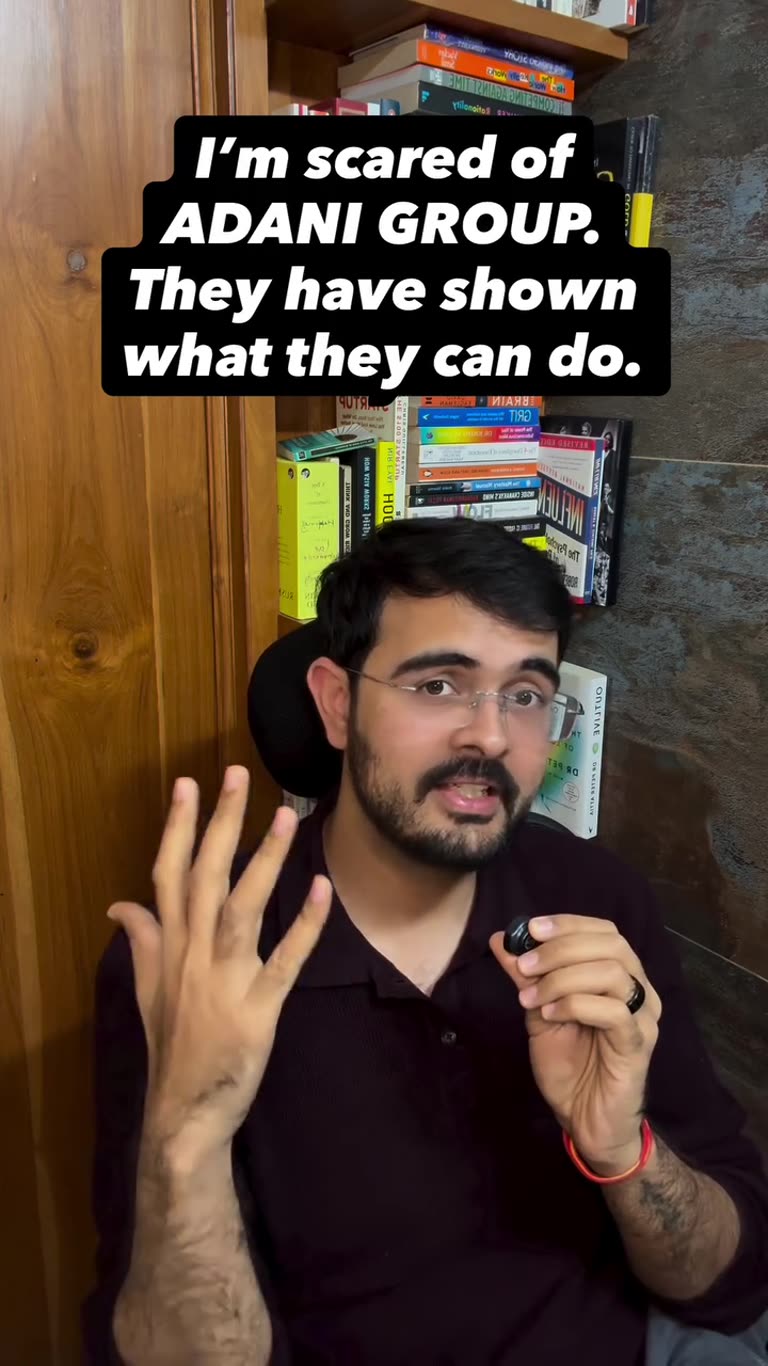
Adani filed a criminal defamation case against journalist Ravi Nair, he was convicted and sentenced to one year in jail, and the court explicitly cited the need for a deterrent message.
Why we say that›
Adani won a criminal defamation case against journalist Ravi Nair and the court wanted it to deter critics.
All core facts check out from multiple press reports and Indian law. The reel accurately reports the criminal case, conviction, jail sentence, and the magistrate's stated reason to avoid probation and send a message. It pushes the fear that this now threatens all criticism of any corporate, which goes further than one conviction.
Ravi Nair was convicted after a trial for specific posts between October 2020 and July 2021 on X and articles on AdaniWatch.
Reported 3 Aug 2026
Claims
3 true · 2 unchecked
- True
Adani Group filed a criminal defamation case against someone who wrote or spoke against them.
What's actually true
Adani Enterprises filed a criminal defamation case against journalist Ravi Nair over his posts and articles criticizing the group.
- True
The case against the speaker was a criminal defamation case, not a civil defamation case.
What's actually true
The case filed by Adani against Ravi Nair was explicitly a criminal defamation case in an Ahmedabad court.
- True
In civil defamation cases, parties typically seek an apology, monetary settlement, and resolve the matter without jail.
What's actually true
Civil defamation in India usually involves seeking apology and monetary damages that can be settled without imprisonment.
- Couldn't check
In criminal defamation cases in India, the defendant can be sent to jail.
What's actually true
Under Indian law, criminal defamation is punishable by up to two years of simple imprisonment, a fine, or both.
- Couldn't check
In the criminal defamation case, the court or prosecutor decided to pursue it to send a message and create a deterrent that one cannot write or speak against any corporate without costs involved.
What's actually true
The magistrate denied probation because it would dilute the deterrent effect and send the wrong message in reputational harm cases, but the reel expands this to a deliberate corporate strategy against all critics of any company.
The full story, from the sources›
In a civil defamation case, a person who is defamed can move either... Civil defamation... you from apology, some money, and settle the matter. - legaleagleweb.com Whoever defames another shall be punished with simple imprisonment for a term which may extend to two years, or with fine, or with both. - lawrato.com On 3 September 2021, a criminal defamation case was filed in an Ahmedabad court against freelance journalist Ravi Nair, in connection with his posts and reposts on the social media platform X and his contributions to the independent news site AdaniWatch. - rsf.org (2026-02-04) The case against Nair was initiated by Adani Enterprises Limited, the groups flagship firm... convicted Nair and sentenced him to jail and a fine of 5,000 rupees... for his posts between October 2020 and July 2021 on the X platform and articles on the Australian nonprofit Adani Watch. - Committee to Protect Journalists (2026-02-11) Magistrate: offence proved... no probation as mature individual aware of consequences (would dilute deterrent effect, send wrong message in reputational harm cases). - Scroll.in (2026-02-11)
From reporting
What else it leaves out (2)›
- He received a one-year jail sentence plus a ₹5,000 fine.
- The magistrate described Nair as a mature individual aware of the consequences of his actions.
How it's framed (3)›
Sources (5)›
The case against Nair was initiated by Adani Enterprises Limited, the groups flagship firm... convicted Nair and sentenced him to jail and a fine of 5,000 rupees... for his posts between October 2020 and July 2021 on the X platform and articles on the Australian nonprofit Adani Watch
On 3 September 2021, a criminal defamation case was filed in an Ahmedabad court against freelance journalist Ravi Nair, in connection with his posts and reposts on the social media platform X and his contributions to the independent news site AdaniWatch
Magistrate: offence proved... no probation as mature individual aware of consequences (would dilute deterrent effect, send wrong message in reputational harm cases)
In a civil defamation case, a person who is defamed can move either... Civil defamation... you from apology, some money, and settle the matter
Whoever defames another shall be punished with simple imprisonment for a term which may extend to two years, or with fine, or with both
Notes on this check (2)›
- Dropped 1 support citation(s) for "In criminal defamation cases in India, the defendant can …" because the cited passages do not address the claim directly.
- Dropped 1 support citation(s) for "In the criminal defamation case, the court or prosecutor …" because the cited passages do not address the claim directly.
Checked against 4 sources · 3 Aug 2026
Help us improve
Was this analysis useful?
One tap helps us find what Blindspot should improve next.