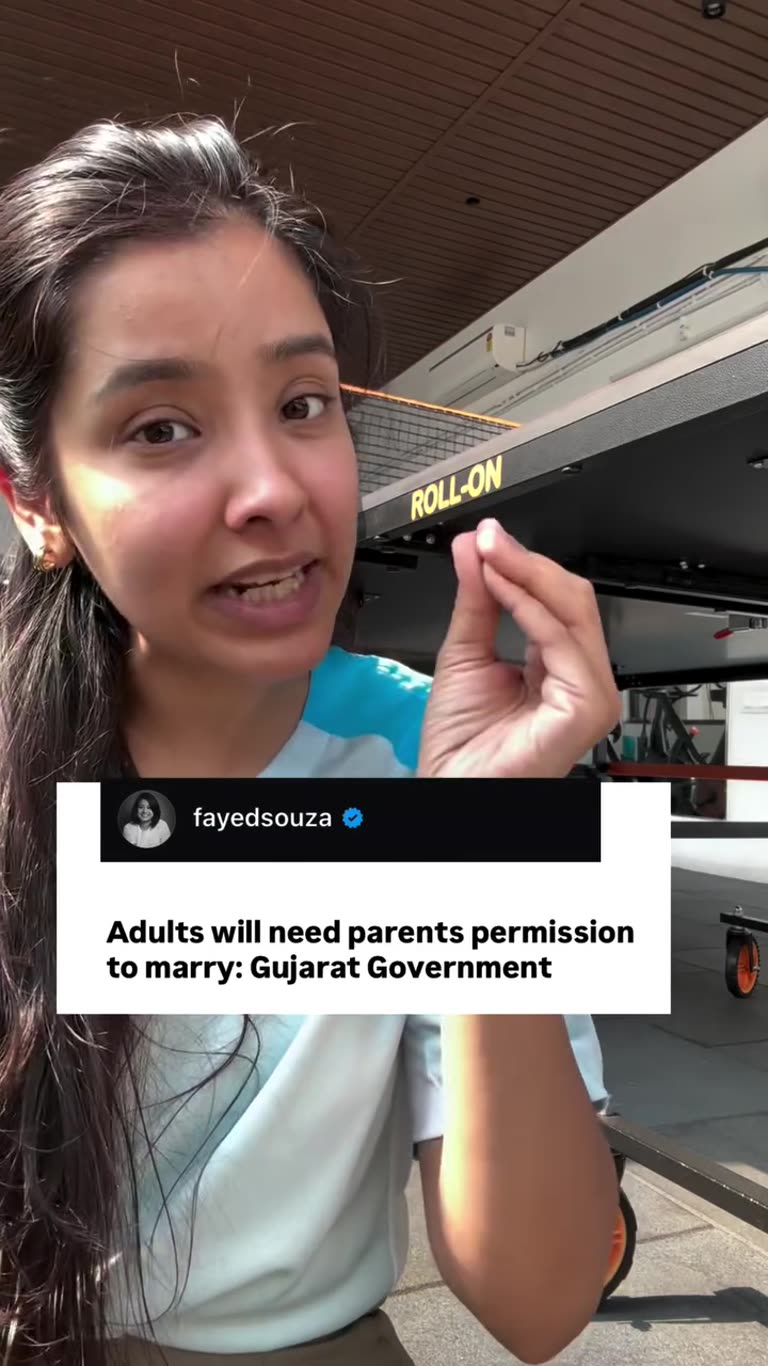
The reel says Under the Gujarat law, orphans cannot get married because they cannot obtain parents' permission., but current sources do not settle it.
Why we say that›
Gujarat requires parental notice for marriage registration, not consent or permission.
The proposed Gujarat rules require couples to submit parents' names, Aadhaar, contact details and a declaration that parents were informed. Authorities notify parents and wait 30 days before registering. This is not parental consent or permission. No source mentions any bar on orphans. The reel exaggerates the rule as a ban on adult choice and orphans marrying, while framing it as a targeted anti-fraud measure with hidden political aims.
Based on only a few sources, so read this as a first look, not the last word.
The notice-and-waiting-period rule is real and aimed at alerting parents. None of the sources show it requires permission, blocks adult marriages, or stops orphans. The leap from notification to veto power and orphan ban is the unsupported step.
The rules require notification and a waiting period, not parental consent or permission that can block registration.
Reported 14 Aug 2026
Claims
1 exaggerated · 3 unchecked
- True, but exaggerated
Gujarat government has proposed or enacted a law requiring parents' permission or consent for registration of marriages even for consenting adults.
What's actually true
The rules require parents' ID details, a declaration that parents were informed, and official notice to parents with a 30-day wait before registration. This is not consent or permission.
- Couldn't check
Under the Gujarat law, orphans cannot get married because they cannot obtain parents' permission.
What's actually true
No source mentions orphans or any bar on people without parents. Searches for orphan impact returned nothing.
- Couldn't check
The Gujarat government introduced the parental consent requirement for marriage registration primarily to stop interfaith marriages involving fraud such as Salim becoming Suresh to marry.
What's actually true
Officials cited stopping identity fraud in love jihad cases as one reason. Sources also mention transparency and monitoring. It is not framed as the sole or primary legal goal.
- Couldn't check
The Gujarat marriage law was introduced to bring transparency in marriages and for two other big reasons in addition to stopping fraud in interfaith marriages.
What's actually true
Transparency and fraud prevention are stated goals. The reel lists two extra unspecified big reasons that sources do not detail.
The full story, from the sources›
Gujarat Registration of Marriages (Amendment) Act, 2026 (proposed; exact parental provisions in accompanying rules notification). - egazette.gujarat.gov.in (2026-02-19) Applicants will need to provide the names, addresses, Aadhaar numbers and contact details of their parents... attach a declaration on whether the bride and the groom have informed their parents... parents will be informed within 10 days... registered only after 30 days... certificate issued after 40 days. - Hindustan Times (2026-02-21) (linked coverage) | "A body of Supreme Court judgments, legal experts, and social scientists say adults need no one’s permission to marry, least of all the government’s endorsement of a parent’s veto... Gujarats decision to make parental consent mandatory for marriage registration has opened a fault line, one that runs straight through the Constitution. - The Wire (2026-02-22) Couples seeking to register their marriage would be required to submit identity documents of their parents and declare that they have informed them about the marriage. Parents would then be officially notified within 10 working days after an application is accepted. Registration would take place only after at least 30 days. - Frontline (2026-03-02) The proposed amendments introduce provisions requiring submission of Aadhaar details, mandatory disclosure of whether parents have been informed, and the sharing of parents contact information. Further, authorities would be required to notify parents of a marriage application and impose a 30-day waiting period before registration. - SabrangIndia (2026-03-19)
From primary sources · reporting
What else it leaves out (2)›
- The law applies to marriage registration only. Adults remain free to marry without registration under existing Supreme Court rulings on choice of partner.
- No official document or news report discusses impact on orphans or people without living parents.
How it's framed (4)›
Sources (5)›
Couples seeking to register their marriage would be required to submit identity documents of their parents and declare that they have informed them about the marriage. Parents would then be officially notified within 10 working days after an application is accepted. Registration would take place only after at least 30 days.
Applicants will need to provide the names, addresses, Aadhaar numbers and contact details of their parents... attach a declaration on whether the bride and the groom have informed their parents... parents will be informed within 10 days... registered only after 30 days... certificate issued after 40 days.
The proposed amendments introduce provisions requiring submission of Aadhaar details, mandatory disclosure of whether parents have been informed, and the sharing of parents contact information. Further, authorities would be required to notify parents of a marriage application and impose a 30-day waiting period before registration.
Gujarat Registration of Marriages (Amendment) Act, 2026 (proposed; exact parental provisions in accompanying rules notification).
(linked coverage) | "A body of Supreme Court judgments, legal experts, and social scientists say adults need no one’s permission to marry, least of all the government’s endorsement of a parent’s veto... Gujarats decision to make parental consent mandatory for marriage registration has opened a fault line, one that runs straight through the Constitution.
About this account›
- Finology Legal regularly comments on legal and political issues, often with a critical or explanatory tone on government policies.
Notes on this check (4)›
- The video was successfully downloaded and key frames read for on-screen text and claims.
- Dropped 3 support citation(s) for "Gujarat government has proposed or enacted a law requirin…" because the cited passages do not address the claim directly.
- Dropped 2 support citation(s) for "The Gujarat government introduced the parental consent re…" because the cited passages do not address the claim directly.
- Dropped 2 support citation(s) for "The Gujarat marriage law was introduced to bring transpar…" because the cited passages do not address the claim directly.
Checked against 2 sources · 14 Aug 2026
Help us improve
Was this analysis useful?
One tap helps us find what Blindspot should improve next.