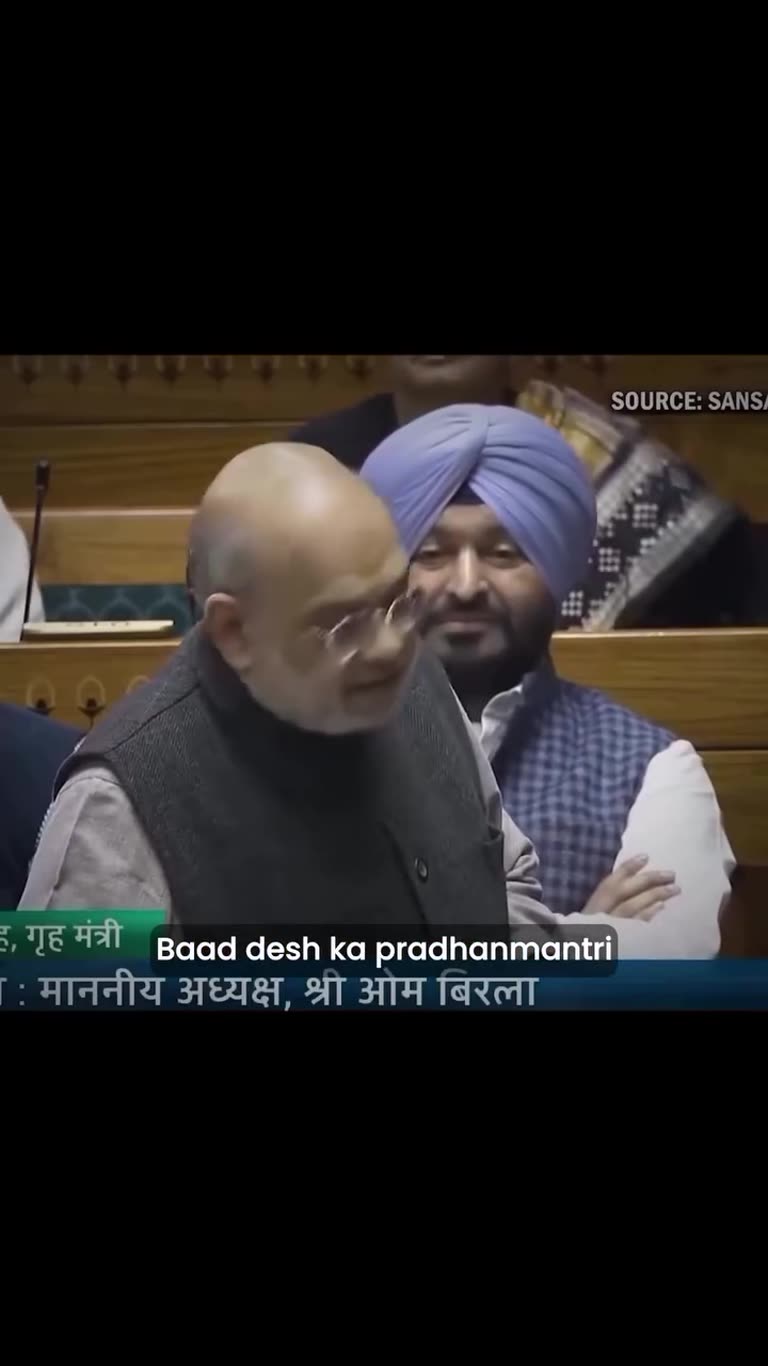
The reel's central claim is supported: Amit Shah stood in Parliament and said that after independence, the Congress president (who would become PM) got votes where Sardar Patel received 28 votes and Jawaharlal Nehru received 2 votes.
Why we say that›
Amit Shah's 'vote chori' claim on Nehru is debunked as a myth based on the informal 1946 Congress president selection.
The reel accurately details the 1946 informal process where PCCs favored Patel but Gandhi and the CWC chose Nehru, with Patel withdrawing. No formal vote or theft occurred. Core timeline, Patel's death, and lack of controversy are all backed by sources.
Reported 31 Jul 2026
Claims
1 true · 8 unchecked
- Couldn't check
Amit Shah stood in Parliament and said that after independence, the Congress president (who would become PM) got votes where Sardar Patel received 28 votes and Jawaharlal Nehru received 2 votes.
What's actually true
Shah made this exact claim in his December 2025 Lok Sabha speech.
- Couldn't check
The 1946 Congress Presidential Election (for the post that would lead to PM) happened in 1946, before independence was declared in February 1947, and had no direct connection to the Prime Minister post.
What's actually true
The process occurred in 1946 for Congress president, who later led the interim government. Full independence came in 1947.
- True
India's first general elections were held in 1951, and Sardar Patel died in 1950, so he could not have become PM after the first elections.
What's actually true
Patel died December 1950. First general elections occurred 1951-52.
- Couldn't check
Maulana Azad was made Congress President in 1940 and remained so until 1946 because the Quit India Movement led to most Congress leaders being jailed, preventing elections.
What's actually true
Azad served 1940-1946 with no elections due to jailing during Quit India (1942).
- Couldn't check
In 1946, there were 15 Provincial Congress Committees (PCCs) that discussed the Congress President; 12 supported Sardar Patel, 3 supported Acharya Kripalani, and none supported Jawaharlal Nehru.
What's actually true
12 of 15 PCCs backed Patel, none backed Nehru (variants note 3 for Kripalani).
- Couldn't check
The 1946 discussion on Congress President was an informal discussion; no postal ballot, ballot papers, or proper formal voting was used.
What's actually true
No formal ballot or election took place. It was informal nominations and discussions.
- Couldn't check
Sardar Patel and Acharya Kripalani withdrew their nominations; the Congress Working Committee (CWC) decided on the President, choosing Nehru because Mahatma Gandhi and the CWC believed he was the best choice to deal with the British due to his London experience, English proficiency, and understanding of the British mindset (Trinity College education).
What's actually true
Patel and Kripalani withdrew after Gandhi made his preference for Nehru clear. CWC endorsed based on Nehru's suitability for British negotiations.
- Couldn't check
Sardar Patel had previously served as Congress President; if there had been major controversy over the 1946 presidential election, it would have been covered in contemporary media or by historians, but no such articles exist.
What's actually true
Patel had prior terms. The process generated no major contemporary controversy in media or histories.
- Couldn't check
The claim that Sardar Patel was chosen as first PM but Jawaharlal Nehru became PM after 'vote chori' (vote theft) is completely false; these claims originate from a particular party's IT cell and are spread via WhatsApp forwards.
What's actually true
The 'vote chori' narrative is a myth per historians. Recent versions trace to political rhetoric and social media forwards.
The full story, from the sources›
Vallabhbhai Patel (31 October 1875 – 15 December 1950)... first Deputy Prime Minister and Home Minister of India from 1947 to 1950. - Wikipedia He served as Congress president from 1940 to 1945, during which the Quit India rebellion was launched. Azad was imprisoned, together with the entire Congress leadership... In office 1940–1946. - Wikipedia 12 out of 15 Provincial Congress Committees (PCCs) nominated Sardar Patel. Nehru got zero PCC nominations. There was no voting, no ballot, no election between Nehru and Patel. So the claim of “2 votes” or “vote chori” is pure fiction. - Source 12 out of 15 Pradesh Congress Committees nominated Sardar Patel... by this time Gandhi had already made his choice known... Rajendra Prasad was using the phrase “once again”, indeed was referring to the denial of Presidentship of the Congress to Patel, always at the last moment in 1929, 1937 and 1946 in preference to Nehru. - VIF India (2013-11-18) He continued as the President of the Congress till 1946, for no election was held during this period as almost every Congress leader was in prison on account of the Quit India Movement (1942). - INC.in (2023-11-09)
From primary sources · reporting
How it's framed (3)›
Sources (8)›
Sardar Patel received 28 votes, while Jawaharlal Nehru got only two. Yet Nehru became the prime minister. What really happened in 1946 — Patel, Nehru & the 'vote chori' myth... the circumstances under which Jawaharlal Nehru was made Congress president in 1946, a position that later positioned him to head the interim government. 12 out of 15 Pradesh Congress Committees nominated Sardar Patel... Gandhi had already made his choice known.
28 votes went to Sardar Vallabhbhai Patel and two were cast in favour of Jawaharlal Nehru. But Nehru ji ended up being the Prime Minister. Congress rebuttal cites historian Rajmohan Gandhi.
Vallabhbhai Patel (31 October 1875 – 15 December 1950)... first Deputy Prime Minister and Home Minister of India from 1947 to 1950.
Sardar Vallabh Bhai Patel died on 15th Oct 1950... The first general elections in india was held between 25th Oct 1951 and 21 Feb 1952.
He served as Congress president from 1940 to 1945, during which the Quit India rebellion was launched. Azad was imprisoned, together with the entire Congress leadership... In office 1940–1946.
He continued as the President of the Congress till 1946, for no election was held during this period as almost every Congress leader was in prison on account of the Quit India Movement (1942).
12 out of 15 Provincial Congress Committees (PCCs) nominated Sardar Patel. Nehru got zero PCC nominations. There was no voting, no ballot, no election between Nehru and Patel. So the claim of “2 votes” or “vote chori” is pure fiction.
12 out of 15 Pradesh Congress Committees nominated Sardar Patel... by this time Gandhi had already made his choice known... Rajendra Prasad was using the phrase “once again”, indeed was referring to the denial of Presidentship of the Congress to Patel, always at the last moment in 1929, 1937 and 1946 in preference to Nehru.
About this account›
- Piyush Semwal's content often provides Congress-aligned historical corrections against right-wing claims on Indian independence leaders.
Notes on this check (10)›
- The vision model successfully extracted on-screen text and transcript from the downloaded reel; no access or throttling issues occurred.
- Dropped 2 support citation(s) for "Amit Shah stood in Parliament and said that after indepen…" because the cited passages do not address the claim directly.
- Dropped 1 support citation(s) for "The 1946 Congress Presidential Election (for the post tha…" because the cited passages do not address the claim directly.
- Dropped 1 support citation(s) for "India's first general elections were held in 1951, and Sa…" because the cited passages do not address the claim directly.
- Dropped 2 support citation(s) for "Maulana Azad was made Congress President in 1940 and rema…" because the cited passages do not address the claim directly.
- Dropped 2 support citation(s) for "In 1946, there were 15 Provincial Congress Committees (PC…" because the cited passages do not address the claim directly.
- Dropped 2 support citation(s) for "The 1946 discussion on Congress President was an informal…" because the cited passages do not address the claim directly.
- Dropped 1 support citation(s) for "Sardar Patel and Acharya Kripalani withdrew their nominat…" because the cited passages do not address the claim directly.
- Dropped 1 support citation(s) for "Sardar Patel had previously served as Congress President;…" because the cited passages do not address the claim directly.
- Dropped 3 support citation(s) for "The claim that Sardar Patel was chosen as first PM but Ja…" because the cited passages do not address the claim directly.
Checked against 1 source · 31 Jul 2026
Help us improve
Was this analysis useful?
One tap helps us find what Blindspot should improve next.