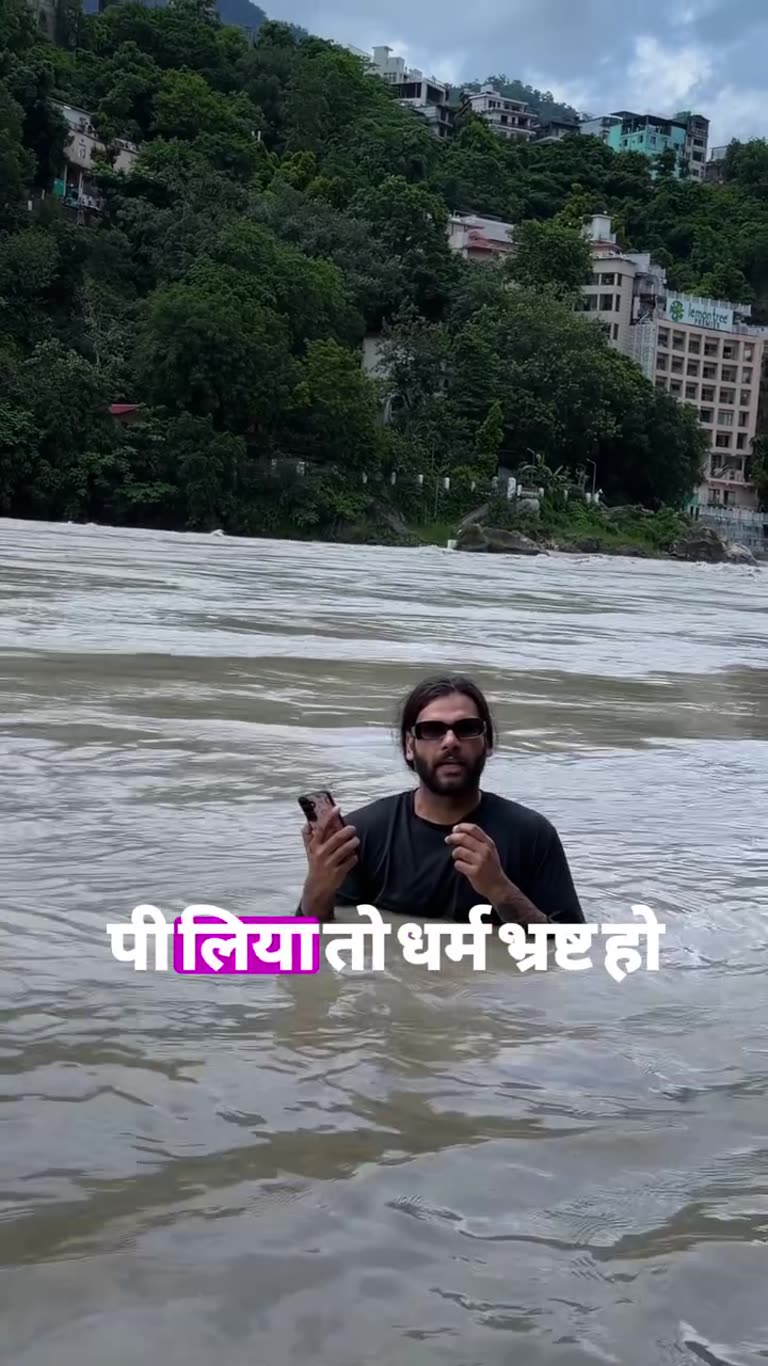
The reel leaves out or misstates a key part of what happened.
Why we say that›
Ganga pollution claims are broadly true, but GD Agarwal fasted for 111 days not 114 and the core degradation message mixes real facts with rhetorical overreach.
Untreated sewage, industrial waste, sand mining, non-biodegradable offerings, encroachment, and thousands of crores spent on cleaning are all well-documented. The specific 114-day fast claim is off by a few days while the death is accurate, and the closing line frames a valid pollution point as the singular "real" degradation in a way that overblows selective outrage.
The exact 114-day fast duration is incorrect (actual ~111 days). This minor discrepancy does not change the overall story of his protest and death.
Reported 14 Aug 2026
Claims
2 true · 7 unchecked
- Couldn't check
Industrial chemicals flow into the Ganga every day
What's actually true
Industrial effluents, including toxic chemicals, are documented as entering the river daily in large volumes.
- Couldn't check
Non-biodegradable items are dumped into the Ganga in the name of offerings to ancestors
What's actually true
Plastic and non-biodegradable religious offerings are widely reported along the Ganga.
- Couldn't check
Encroachment happens on the Ganga
What's actually true
Encroachment of floodplains is cited by official panels as a key contributor to Ganga pollution.
- Couldn't check
Thousands of crores have been spent on cleaning the Ganga
What's actually true
Namami Gange and related programs have allocated over ₹20,000–26,000 crore.
- Couldn't check
GD Agarwal fasted for 114 days
What's actually true
We couldn't verify this claim with a reliable source. Reliable reports state he fasted for approximately 111–112 days before death.
- Couldn't check
GD Agarwal died after his fast
What's actually true
He died after suffering a cardiac arrest while on the indefinite fast.
- Couldn't check
The real degradation of the Ganga is not having a plate of food but making a living river receive untreated sewage
What's actually true
Untreated sewage is a primary real degradation factor, but the phrasing overstates it as the singular "real" issue while downplaying cultural/religious practices the reel itself criticizes.
- True
Untreated sewage water is dumped into the Ganga every day
What's actually true
Multiple sources confirm thousands of millions of liters of untreated sewage enter the Ganga daily.
- True
Illegal sand mining happens every day in the Ganga
What's actually true
Reports document ongoing illegal sand mining in the Ganga and its tributaries on a daily/continuous basis.
The full story, from the sources›
Approximately 3000 mld of sewage is discharged into the main stem of the river Ganga from the Class I & II towns located along the banks, against which treatment capacity of about 1000 mld has been created till date. - National Mission for Clean Ganga ‘Namami Gange Programme’ ... with budget outlay of Rs.20,000 Crore. - NMCG sand mining activities at the catchment scale, across the Ganges-Brahmaputra-Meghna River system. - IOP Science (2024) the total budgetary allocation for the Namami Gange Programme since inception up to FY 2025-26 is ₹ 26,824.86 crore. - PIB (2025-07-31) Almost five billion liters of sewage flow into the river every day, only a quarter of which is treated. Indian industries dump nearly a billion liters of waste into the river daily. - Harvard Divinity School
From primary sources · reporting
How it's framed (4)›
Sources (16)›
Three-quarters of all the sewage generated in the northern plains remains completely untreated before being discharged into the Ganges and its tributaries. Industrial effluents account for about 12% of the total volume of waste reaching the Ganges. ... these effluents are often toxic and non-biodegradable. encroachment of the floodplains and sand mining as the key reasons for the Ganga's pollution
Almost five billion liters of sewage flow into the river every day, only a quarter of which is treated. Indian industries dump nearly a billion liters of waste into the river daily.
Approximately 3000 mld of sewage is discharged into the main stem of the river Ganga from the Class I & II towns located along the banks, against which treatment capacity of about 1000 mld has been created till date.
discharge millions every day of gallons of raw, untreated sewage.
Over 75% of the sewage generated in the towns and cities along the Ganga flows untreated into the river.
illegal sand mining continues every day across the eastern Indian state (Bihar, Ganga tributaries).
sand mining activities at the catchment scale, across the Ganges-Brahmaputra-Meghna River system.
Each day, more than 500 million liters of wastewater from industrial sources are dumped directly into Ganga.
plastic waste present at nearly every point along the river, ranging from plastic bottles and carrier bags to plastic religious offerings.
The Ganga has survived history, but plastic isn't biodegradable, unlike our ancestors. The use of plastic and other non-biodegradable materials.
The green panel identified the discharge of untreated sewage, industrial effluents, hazardous waste and biomedical waste into the river, besides encroachment of the floodplains and sand mining as the key reasons for the Ganga's pollution in West Bengal.
the total budgetary allocation for the Namami Gange Programme since inception up to FY 2025-26 is ₹ 26,824.86 crore.
‘Namami Gange Programme’ ... with budget outlay of Rs.20,000 Crore.
The project was proposed by the Indian Government in 2014 with an original projected budget of Rs.20,000 Crore.
died after fasting for 111 days.
who was on an indefinite fast since June 22 ... died ... after suffering a cardiac arrest. (approx. 111-112 days from June 22 to Oct 11).
About this account›
- Instagram account Utkarsh Gaur appears to produce commentary/podcast-style content focused on social, environmental, and cultural issues in India.
Notes on this check (9)›
- Dropped 1 support citation(s) for "Untreated sewage water is dumped into the Ganga every day" because the cited passages do not address the claim directly.
- Dropped 1 support citation(s) for "Illegal sand mining happens every day in the Ganga" because the cited passages do not address the claim directly.
- Dropped 3 support citation(s) for "Industrial chemicals flow into the Ganga every day" because the cited passages do not address the claim directly.
- Dropped 2 support citation(s) for "Non-biodegradable items are dumped into the Ganga in the …" because the cited passages do not address the claim directly.
- Dropped 2 support citation(s) for "Encroachment happens on the Ganga" because the cited passages do not address the claim directly.
- Dropped 3 support citation(s) for "Thousands of crores have been spent on cleaning the Ganga" because the cited passages do not address the claim directly.
- Dropped contradiction citations for "GD Agarwal fasted for 114 days" because the cited passages do not address the claim directly.
- Dropped 1 support citation(s) for "GD Agarwal died after his fast" because the cited passages do not address the claim directly.
- Dropped 3 support citation(s) for "The real degradation of the Ganga is not having a plate o…" because the cited passages do not address the claim directly.
Checked against 5 sources · 14 Aug 2026
Help us improve
Was this analysis useful?
One tap helps us find what Blindspot should improve next.