Polymer notes and the MDR clarification are real. Nothing connects them to forcing cash use or to any specific investor winning a tender.
- No record found: The sources reviewed do not settle whether this guy who's just made a huge investment in polymers gets the tender to provide the raw materials for…
- No record found: The sources reviewed do not settle whether they can only switch to polymer notes if the old notes are used up through normal wear and tear and banks…
- No record found: The sources reviewed do not settle whether they can only replace whatever value the RBI destroys.
- No record found: The sources reviewed do not settle whether Authorities want to push people away from UPI so they use more cash.
Checked against: The Hindu, firstpost.com, News18, The Times of India
Why we say that›
RBI plans polymer notes from 2027. No evidence links them to one investor's tender or a plot against UPI.
Polymer notes will launch in FY28 and coexist with paper notes. Sitharaman clarified MDR hits merchants, not customers. No source names any specific investor who recently bought into polymers and won a tender. RBI destroys soiled notes and prints replacements. Nothing limits this only to worn-out value or requires it for polymer switch. The causal motive tying UPI fees to forcing cash use for one supplier's gain has zero support.
Based on only a few sources, so read this as a first look, not the last word.
Polymer notes and the MDR clarification are real. Nothing connects them to forcing cash use or to any specific investor winning a tender. The causal link is the unsupported leap.
RBI's polymer tender is an open Expression of Interest to multiple global and domestic manufacturers with bids due August 2026. No single 'guy' or recent huge investor is named in any report.
Reported 14 Aug 2026
Claims
2 true · 4 no record
- No record found
This guy who's just made a huge investment in polymers gets the tender to provide the raw materials for the new notes.
What we found
RBI subsidiary called for bids from polymer makers but no report names any specific recent investor or person winning the tender.
- No record found
They can only switch to polymer notes if the old notes are used up through normal wear and tear and banks give them back to the RBI.
What we found
No source confirms this as a hard limit on when polymer notes can start circulating.
- No record found
They can only replace whatever value the RBI destroys.
What we found
RBI does destroy soiled notes and prints replacements but no source sets this as the only amount they can replace.
- No record found
Authorities want to push people away from UPI so they use more cash.
What we found
UPI has grown rapidly to over 18 billion transactions per month with government support. No evidence of a policy to reverse this for cash.
- True
The government or authorities are introducing new plastic polymer notes in circulation.
What we found
RBI Governor announced polymer notes will be in circulation from FY28 and will coexist with paper notes.
- True
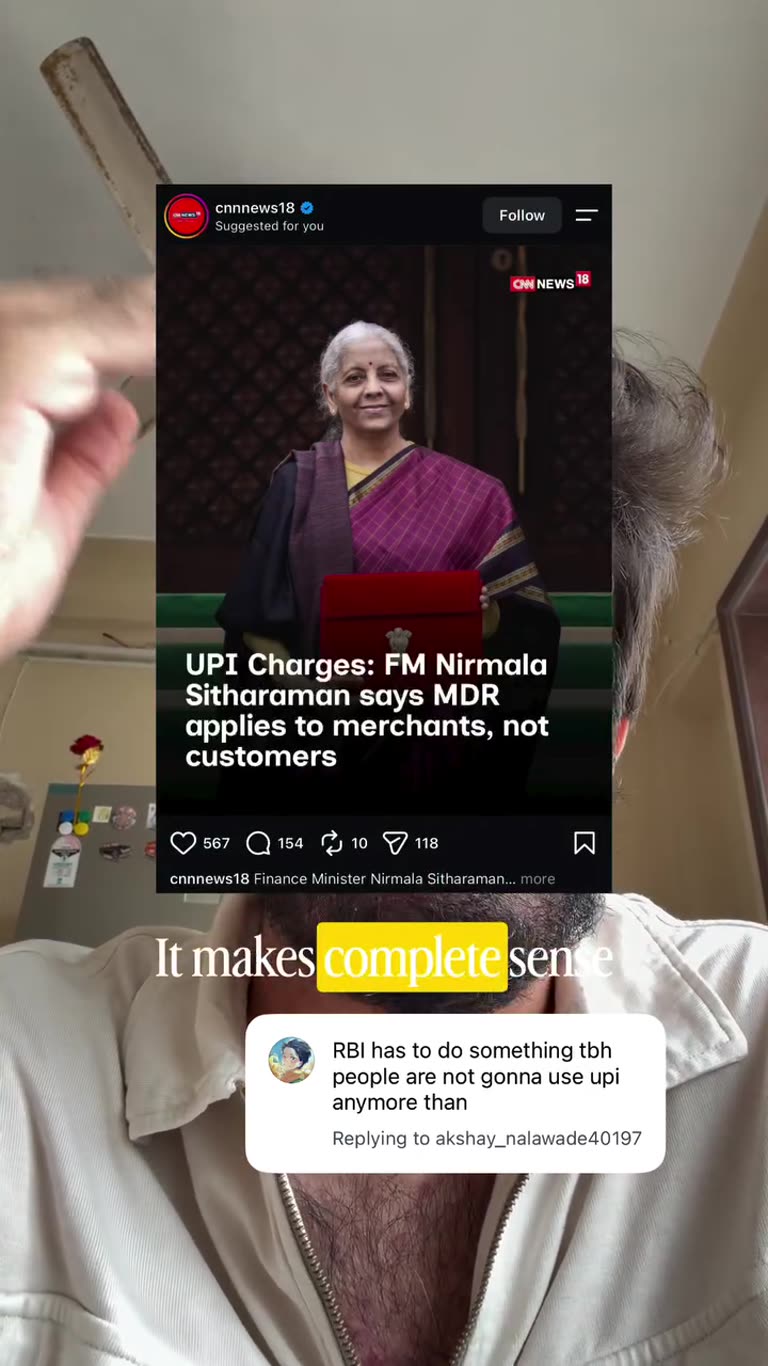
FM Nirmala Sitharaman says MDR applies to merchants, not customers.
What we found
She posted exactly this on X in response to claims that customers would pay more.
The full story, from the sources›
The introduction of plastic banknotes will not replace the existing paper currency. Polymer and paper banknotes will coexist. - firstpost.com (2026-07-17) Currency notes made out of polymers (plastic) will be in circulation in the country from next financial year, Reserve Bank of India (RBI) Governor Sanjay Malhotra said on Wednesday (August 5, 2026). - The Hindu (2026-08-05) In a post on X on Thursday, Sitharaman said, Merchant Discount Rate (MDR) applies only on the merchants and not on the end users/customers. - News18 (2026-08-07) Finance minister Nirmala Sitharaman on Thursday pushed back Congress leader Jairam Ramesh's claims that ordinary people could end up paying more for using the Unified Payments Interface (UPI), clarifying that any Merchant Discount Rate (MDR) on digital transactions would be levied on merchants and not on customers... Merchant Discount Rate (MDR) applies only on the merchants and not on the end users/customers. - The Times of India (2026-08-07)
From reporting
What else it leaves out (2)›
- Polymer notes are planned to run alongside paper notes, not replace them after all old ones wear out.
- Government policy has actively promoted UPI growth for years, directly contradicting any motive to push people back to cash.
How it's framed (4)›
Sources (4)›
Currency notes made out of polymers (plastic) will be in circulation in the country from next financial year, Reserve Bank of India (RBI) Governor Sanjay Malhotra said on Wednesday (August 5, 2026).
The introduction of plastic banknotes will not replace the existing paper currency. Polymer and paper banknotes will coexist.
In a post on X on Thursday, Sitharaman said, Merchant Discount Rate (MDR) applies only on the merchants and not on the end users/customers.
Finance minister Nirmala Sitharaman on Thursday pushed back Congress leader Jairam Ramesh's claims that ordinary people could end up paying more for using the Unified Payments Interface (UPI), clarifying that any Merchant Discount Rate (MDR) on digital transactions would be levied on merchants and not on customers... Merchant Discount Rate (MDR) applies only on the merchants and not on the end users/customers.
About this account›
- Oamkaar account often shares financial and political commentary with a skeptical or investigative tone.
Checked against 4 sources · 14 Aug 2026
Help us improve
Was this analysis useful?
One tap helps us find what Blindspot should improve next.