The top 1% income share of 23% is real from the Piketty paper. The exact salary thresholds for top 10% and top 1% are wrong, and linking middle-class salaries running out by the 20th directly to this gap is a leap.
Why we say that›
Top 1% takes 23% of income is accurate. The ₹23k top 10% and ₹1.89 lakh top 1% monthly thresholds are not from the paper.
The reel cites a real paper showing India's top 1% income share at about 23%. Its specific monthly thresholds do not match the paper or most analyses, which put top 10% around ₹25k-64k/month and top 1% much higher. The opening claim about salaries vanishing by the 20th has no supporting data linking it to inequality stats. This creates a misleading picture that the cited numbers prove everyday financial pain.
Based on only a few sources, so read this as a first look, not the last word.
The 23% top 1% share is real. None of the sources link it to salaries disappearing by the 20th or use these exact monthly thresholds. The causal connection is asserted without support.
The exact monthly thresholds shown do not appear in the cited Piketty-Bharti paper. Independent analyses give different figures, especially for top 1%.
Reported 8 Aug 2026
Claims
1 false · 2 true · 1 unchecked
- False
To be in the top 10% requires ₹23,727 per month
What's actually true
The cited paper and similar analyses put the top 10% threshold around ₹25,000-64,000 per month. This exact figure does not appear in the paper.
- Couldn't check
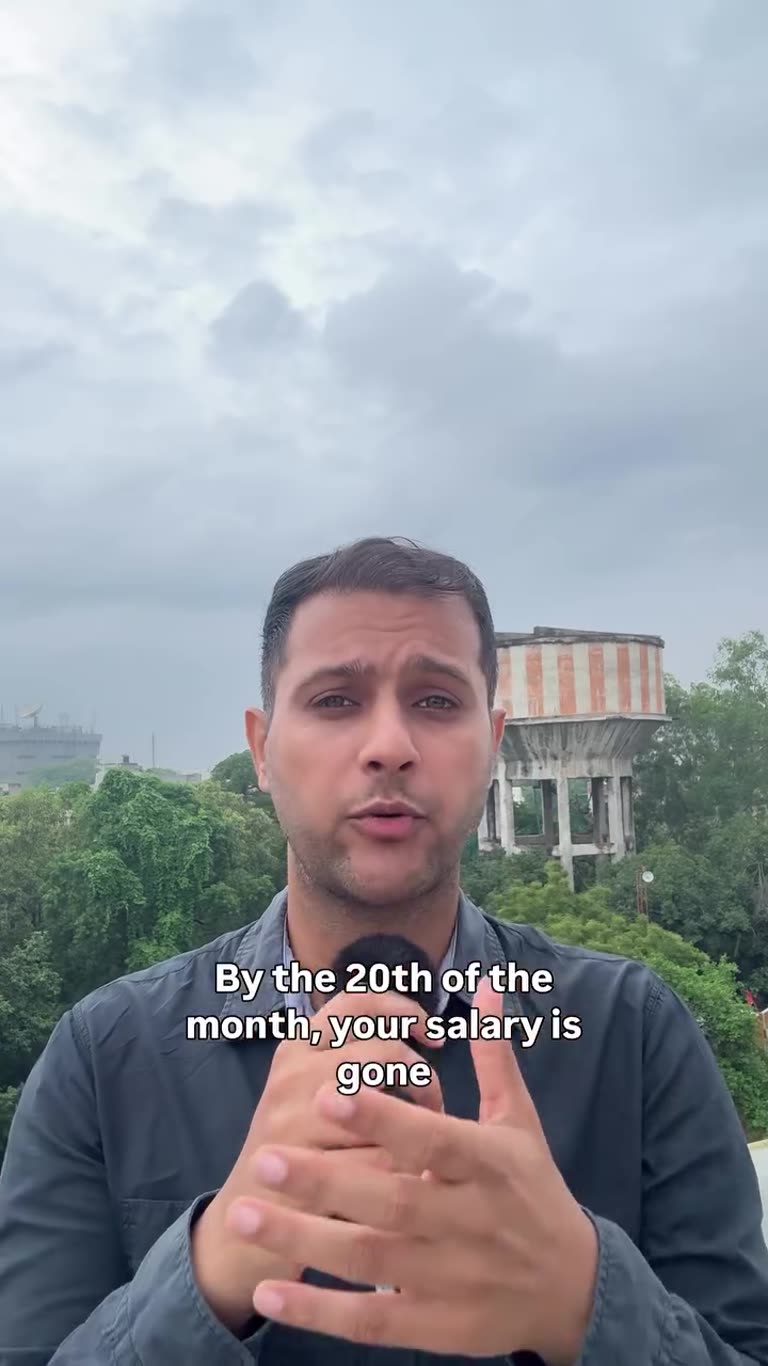
By the 20th of the month, your salary is gone
What's actually true
We couldn't verify this claim with a reliable source. No independent survey, report or data links this common saying to the inequality paper or stats. Searches returned only copies of this reel.
- True
India's top 1% now takes 23% of income
What's actually true
The paper and World Inequality Database report top 1% income share at 22.6% in 2022-23, which rounds to 23%.
- True
The paper shows that India's top 1% now takes 23% of income
What's actually true
The cited paper 'Income and Wealth Inequality in India, 1922-2023' directly supports this figure.
The full story, from the sources›
By 2022-23, top 1% income and wealth shares (22.6% and 40.1%) are at their highest historical levels and India’s top 1% income share is among the very highest in the world , higher than even South Africa, Brazil and US. - WID - World Inequality Database (2024-03-19) earliest appearance: this reel (and near-identical copies using same phrasing "By the 20th of the month, your salary is gone + paper stats; no earlier independent reporting of these exact monthly thresholds tied to the paper). - instagram.com (2026-08-07)
From primary sources · reporting
What else it leaves out (2)›
- No data connects middle-class salaries running out by the 20th of the month to the top 1% income share.
- The paper also covers wealth inequality reaching 40% for the top 1%, higher than colonial times, which the reel does not mention.
How it's framed (3)›
Sources (2)›
By 2022-23, top 1% income and wealth shares (22.6% and 40.1%) are at their highest historical levels and India’s top 1% income share is among the very highest in the world , higher than even South Africa, Brazil and US.
earliest appearance: this reel (and near-identical copies using same phrasing "By the 20th of the month, your salary is gone + paper stats; no earlier independent reporting of these exact monthly thresholds tied to the paper)
About this account›
- The account Karmveer regularly posts on economics, inequality and public policy, often using dramatic framing of data to highlight wealth gaps.
Notes on this check (3)›
- No full speech transcript available; analysis based on on-screen text, caption, keyframes and sources.
- Searches for the exact salary thresholds and salary-by-20th claim returned only copies of this reel or similar but non-matching figures.
- Dropped 1 support citation(s) for "To be in the top 10% requires ₹23,727 per month" because the cited passages do not address the claim directly.
Checked against 2 sources · 8 Aug 2026
Help us improve
Was this analysis useful?
One tap helps us find what Blindspot should improve next.