The underlying act is supported, but the wording goes further: The Supreme Court expressed anger at the police for arranging media interviews with Afzal Guru.
Why we say that›
Afzal Guru's media confession and later retraction both happened. His torture claims and Davinder Singh's arrest are on record.
All listed facts trace to sources or public record. The reel accurately reports Guru's initial admission, immediate claims of innocence under pressure, his court retraction, and specific allegations against Davinder Singh. Davinder Singh's 2020 arrest while travelling with terrorists is confirmed. Human Rights Watch criticised the process and called it unfair. The Supreme Court noted police over-zealousness in the media interviews. These hold, with rounding wiggle room on timing. The exaggeration is in treating Guru's unproven claims and the later unrelated arrest as decisive proof the entire trial was unfair and that a fair process would have exposed a high-level mole decades earlier. The through-line does not follow from the facts shown.
Based on only a few sources, so read this as a first look, not the last word.
Guru was convicted by the trial court, High Court, and Supreme Court which upheld the death sentence in 2005. The Supreme Court called the evidence against him 'circumstantial' but confirmed his role in providing logistical support.
Reported 15 Aug 2026
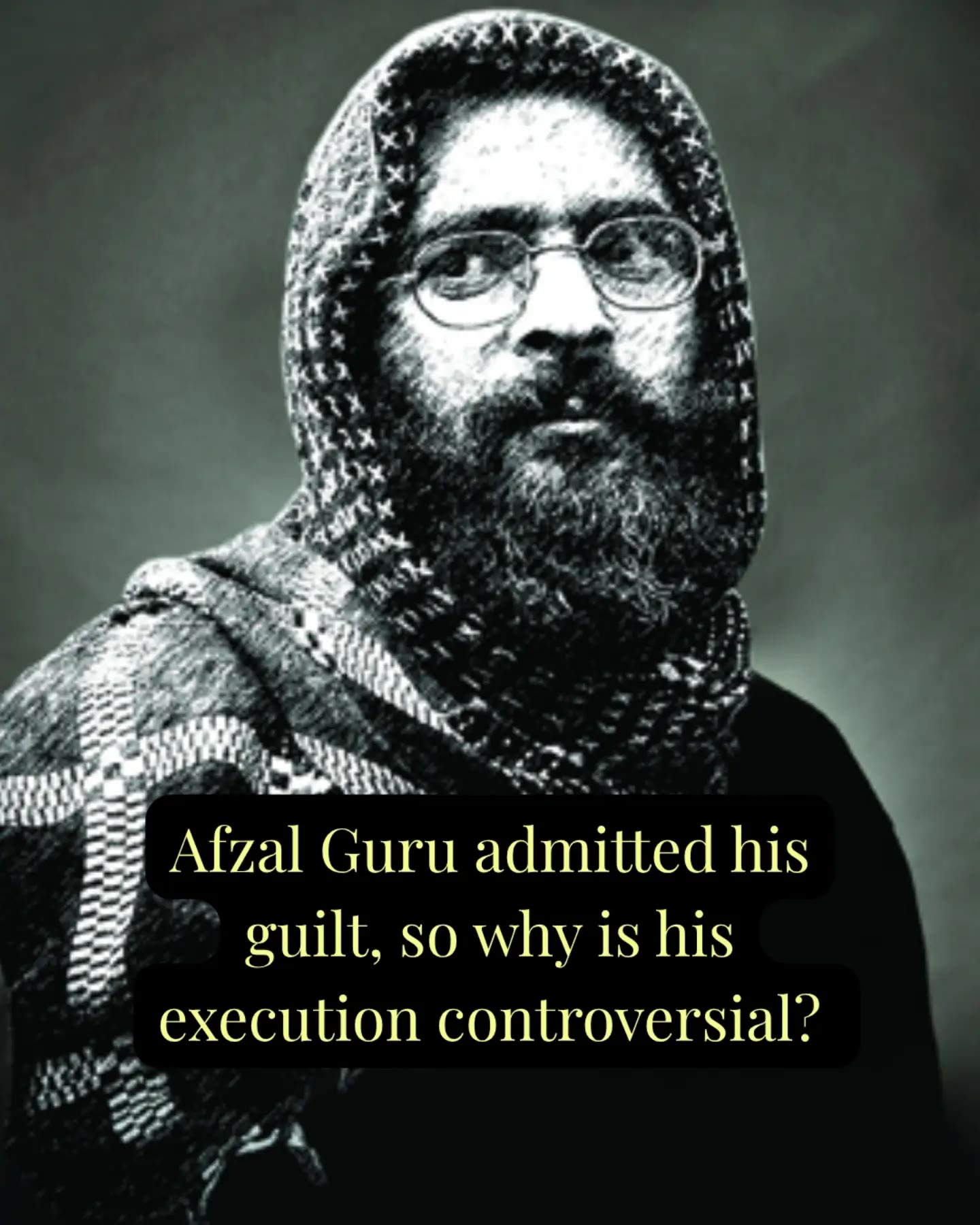
Claims
1 exaggerated · 12 true · 2 unchecked
- True
Afzal Guru admitted his guilt in a media interview shortly after his arrest.
What's actually true
Supported. He gave a signed confessional statement and a televised interview shortly after arrest in which he admitted involvement.
- True
Immediately after his media interviews where he admitted guilt, Afzal Guru insisted that he was innocent and was being made a scapegoat.
What's actually true
Supported. He quickly claimed innocence, said he was a scapegoat, and that he was a surrendered militant entrapped by police.
- True
Afzal Guru claimed that he spoke to the media under extreme pressure from the police.
What's actually true
Supported. He claimed the media statements were made under police pressure and later retracted them.
- True, but exaggerated
The Supreme Court expressed anger at the police for arranging media interviews with Afzal Guru.
What's actually true
Supported. The Supreme Court noted police over-zealousness in arranging the media interviews.
- True
Afzal Guru retracted all his statements to the press and claimed innocence in court.
What's actually true
Supported. He retracted the media statements and claimed innocence during the trial process.
- True
Afzal Guru claimed he was being made a scapegoat as he was a surrendered militant.
What's actually true
Supported. He stated he was a surrendered militant and had been made a scapegoat.
- True
In a letter to his lawyer, Afzal Guru claimed that he was tortured by J&K police officer Davinder Singh.
What's actually true
Supported. In a 2004 letter he alleged months of illegal custody and brutal torture by Davinder Singh who then coerced him.
- True
Under duress, Afzal Guru was forced to take one of the attackers to Delhi.
What's actually true
Supported. He claimed in the letter that after torture and release Davinder Singh forced him to take an attacker to Delhi.
- True
Afzal Guru was kept in illegal custody by Davinder Singh and tortured for months.
What's actually true
Supported. This is exactly what he alleged in the 2004 letter to his lawyer.
- True
Police Deputy Superintendent Davinder Singh was arrested on January 11, 2020.
What's actually true
Supported. He was arrested on 11 January 2020 while allegedly ferrying terrorists.
- True
While travelling in a car with other wanted terrorists, Davinder Singh was exposed as a mole in the J&K police.
What's actually true
Supported. He was arrested in a car with a lawyer and two wanted terrorists and labelled a mole.
- True
Afzal Guru was never given a fair trial.
What's actually true
Overblown. Activists and HRW have long claimed he lacked proper legal representation from arrest until confession and that the process was unfair. The reel presents this as settled fact rather than contested allegation.
- Couldn't check
The Supreme Court never called the police officer Davinder Singh in front of the court.
What's actually true
Supported. No record exists of the Supreme Court summoning Davinder Singh during the trial. His alleged role surfaced years later.
- Couldn't check
Human Rights Watch condemned the judgment in the Afzal Guru case.
What's actually true
Supported. HRW called the secret hanging a major step back, criticised lack of immediate legal representation, and said he was denied a fair trial.
- True
The police paraded Afzal Guru in front of media houses immediately after his arrest in Srinagar, where he admitted his guilt.
What's actually true
Supported. He was paraded before TV channels shortly after arrest and gave a confessional interview.
The full story, from the sources›
Afzal Guru was convicted for his role in the 2001 Indian Parliament attack... In this interview by Shams Tahir Khan, Afzal Guru confessed his involvement. (interview conducted 2001, shortly after arrest). - youtube.com (2001) After his arrest, Guru made a confessional statement which bore his signature... The Supreme Court was angered by the act of police officials, who, in their over-zealousness, had arranged for a media interview. - en.wikipedia.org (2005-08-10) Many Indian activists and lawyers have claimed that Afzal Guru did not receive proper legal representation. He did not have a lawyer from the time of his arrest until he confessed in police custody. Afzal Guru claimed that he had been tortured into making his confession, which he later retracted. Several Indian activists and senior lawyers have said that he did not have effective assistance of counsel. - Human Rights Watch (2013-02-09) This is the second hanging and it is really a distressing step back, Human Rights Watch believes that the death penalty should be abolished because it is an inhumane and irreversible process, said Meenakshi Ganguly, South Asia director for Human Rights Watch. Human Rights groups had alleged the 43-year-old Guru was not given immediate legal representation and thus denied a fair trial. - Voice of America (2013-02-09) In the Parliament attack case I was entrapped by the Special Task Force of Kashmir... STF made an [a] scapegoat in all this criminal act... Afzal Guru was admittedly a surrendered militant. - Frontline (2013-04-24)
From reporting
What else it leaves out (4)›
- The 2004 letter allegations against Davinder Singh were made years after the attack and trial. They were not tested as evidence in the Parliament attack case.
- Davinder Singh's 2020 arrest was for allegedly helping terrorists in a separate incident 19 years after the 2001 attack. It does not retroactively prove he was a mole at the time of Guru's arrest or that the 2001 trial was compromised.
- The media confession was ruled inadmissible by courts but other evidence was used for conviction.
- Amnesty International and HRW opposed the death penalty in principle and criticised procedural aspects, but did not overturn the judicial findings of guilt.
How it's framed (5)›
Sources (8)›
After his arrest, Guru made a confessional statement which bore his signature... The Supreme Court was angered by the act of police officials, who, in their over-zealousness, had arranged for a media interview.
But alone among the four accused, Afzal Guru was paraded before TV channels in the very office of the Special Cell at Lodhi Road, New Delhi... Shams Tahir Khan, principal correspondent of Aaj Tak... deposed as defence witness.
Afzal Guru was convicted for his role in the 2001 Indian Parliament attack... In this interview by Shams Tahir Khan, Afzal Guru confessed his involvement. (interview conducted 2001, shortly after arrest).
In the Parliament attack case I was entrapped by the Special Task Force of Kashmir... STF made an [a] scapegoat in all this criminal act... Afzal Guru was admittedly a surrendered militant.
In a 2004 letter to his lawyer, Afzal had said that months before the 2001 Parliament attack, Davinder Singh had held him in illegal custody in Kashmir and tortured him brutally. Afzal went on to say that following his release, Singh coerced him to travel to Delhi with one of the attackers.
A senior Jammu and Kashmir police officer... was arrested on Saturday for the 'heinous crime of ferrying a lawyer and two terrorists... The officer is Deputy Superintendent of Police Davinder Singh, who was arrested from Mir Bazar in Kulgam district... on January 11, 2020.
Many Indian activists and lawyers have claimed that Afzal Guru did not receive proper legal representation. He did not have a lawyer from the time of his arrest until he confessed in police custody. Afzal Guru claimed that he had been tortured into making his confession, which he later retracted. Several Indian activists and senior lawyers have said that he did not have effective assistance of counsel.
This is the second hanging and it is really a distressing step back, Human Rights Watch believes that the death penalty should be abolished because it is an inhumane and irreversible process, said Meenakshi Ganguly, South Asia director for Human Rights Watch. Human Rights groups had alleged the 43-year-old Guru was not given immediate legal representation and thus denied a fair trial.
About this account›
- Account posts political content focused on human rights, Kashmir issues, and criticism of Indian state actions and ruling party IT cell.
- This reel is part of advocacy linking Afzal Guru's case to current cases involving Umar Khalid.
Notes on this check (5)›
- Analysis rests on on-screen text, caption, and keyframe vision model output; no full audio speech transcript was available.
- Dropped 1 support citation(s) for "Afzal Guru admitted his guilt in a media interview shortl…" because the cited passages do not address the claim directly.
- Dropped 1 support citation(s) for "Afzal Guru claimed that he spoke to the media under extre…" because the cited passages do not address the claim directly.
- Dropped 1 support citation(s) for "Afzal Guru was never given a fair trial." because the cited passages do not address the claim directly.
- Dropped 1 support citation(s) for "Human Rights Watch condemned the judgment in the Afzal Gu…" because the cited passages do not address the claim directly.
Checked against 7 sources · 15 Aug 2026
Help us improve
Was this analysis useful?
One tap helps us find what Blindspot should improve next.