Lower rating made borrowing harder and costlier for firms, but the phrasing overstates the scale of missed opportunities.
Why we say that›
Mostly true, but said more strongly than the evidence supports.
The rating change and its link to lower overseas borrowing costs are confirmed. Predictions of samurai bonds, major Japanese inflows, and automatic gains in currency and stocks exceed what sources establish.
Reported 9 Sept 2026
Claims
2 exaggerated · 2 true · 4 unchecked
- True
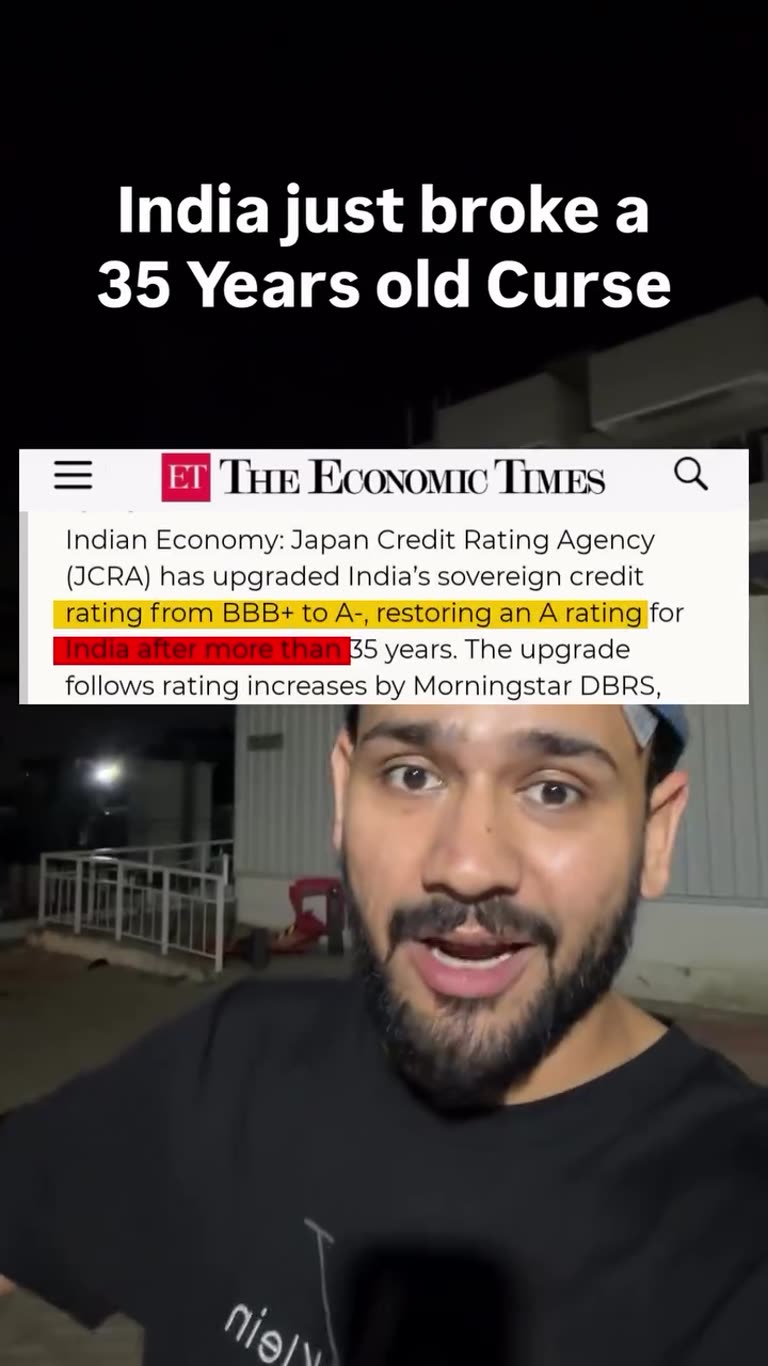
A Japanese credit rating agency upgraded India's sovereign credit rating from BBB+ to A- last week, restoring an A rating for India after more than 35 years.
What's actually true
JCRA upgraded India from BBB+ to A- on 2-3 Sep 2026, first A rating since 1988.
- True
JCRA has upgraded India's sovereign credit rating from BBB+ to A-, restoring an A rating for India after more than 35 years. The upgrade follows rating increases by Morningstar DBRS.
What's actually true
The upgrade follows three 2025 rating increases including by Morningstar DBRS.
- Couldn't check
The upgrade by the Japanese credit rating agency happened for the first time in 35 years.
What's actually true
An A rating returns after 35 years, last held in 1988.
- True, but exaggerated
Because of the previous lower credit rating, India missed out on a lot of opportunities.
What's actually true
Lower rating made borrowing harder and costlier for firms, but the phrasing overstates the scale of missed opportunities.
- Couldn't check
Indian banks, corporates, or PSUs pay higher interest rates when raising money abroad because India was not in an A category.
What's actually true
Sovereign rating directly affects the cost at which Indian banks and companies borrow abroad.
- True, but exaggerated
India could never unlock its full growth potential because its international market rating was not good.
What's actually true
One source links rating to borrowing costs and investor access, but does not establish that India could never reach full growth potential.
- Couldn't check
The Japanese credit rating agency upgrade will allow entities like NHAI, SBI, or other PSUs to raise money from Japanese markets (samurai bonds) at much lower rates.
What's actually true
We couldn't verify this claim with a reliable source. Lower overseas borrowing costs are possible but does not confirm samurai bonds or name NHAI and SBI for this upgrade.
- Couldn't check
Japanese institutions will invest in India, which will improve India's health, strengthen the currency, and push the stock market higher.
What's actually true
The upgrade can attract global investors and improve rupee confidence, but the full list of effects is stated more strongly than the source.
The full story, from the sources›
The Japan Credit Rating Agency (JCR) on Wednesday upgraded India’s sovereign credit rating by one notch to ‘A-‘ from ‘BBB+’... The upgrade covers both Indias foreign-currency and local-currency long-term issuer ratings. - News18 (2026-09-02) Japanese Credit Rating Agency (JCRA) has upgraded Indias sovereign rating to A- from BBB+. - The Economic Times (2026-09-02) Japan Credit Rating Agency’s decision on Wednesday to raise India’s sovereign rating from BBB+ to A- has put an 'A' back on Indias credit scorecard after more than 35 years. - The Economic Times (2026-09-03)
From reporting
How it's framed (5)›
Sources (3)›
Japan Credit Rating Agency’s decision on Wednesday to raise India’s sovereign rating from BBB+ to A- has put an 'A' back on Indias credit scorecard after more than 35 years.
The Japan Credit Rating Agency (JCR) on Wednesday upgraded India’s sovereign credit rating by one notch to ‘A-‘ from ‘BBB+’... The upgrade covers both Indias foreign-currency and local-currency long-term issuer ratings.
Japanese Credit Rating Agency (JCRA) has upgraded Indias sovereign rating to A- from BBB+
Notes on this check (3)›
- Dropped 1 support citation(s) for "The upgrade by the Japanese credit rating agency happened…" because the cited passages do not address the claim directly.
- Dropped 1 support citation(s) for "Indian banks, corporates, or PSUs pay higher interest rat…" because the cited passages do not address the claim directly.
- Dropped 1 support citation(s) for "Japanese institutions will invest in India, which will im…" because the cited passages do not address the claim directly.
Checked against 2 sources · 9 Sept 2026
Help us improve
Was this analysis useful?
One tap helps us find what Blindspot should improve next.