Several sources document high inflation, policy paralysis, stressed banks with high NPAs, and major corruption scandals under UPA.
Why we say that›
UPA-era problems and Modi-era gains are documented but reset and fundamentals claims lack evidence.
Supported data points show higher inflation and NPAs under UPA and later improvements. The reel asserts without evidence that India needed a reset and that fundamentals changed under Modi.
No data on intervening years between FY13-14 and FY25-26
Reported 16 Aug 2026
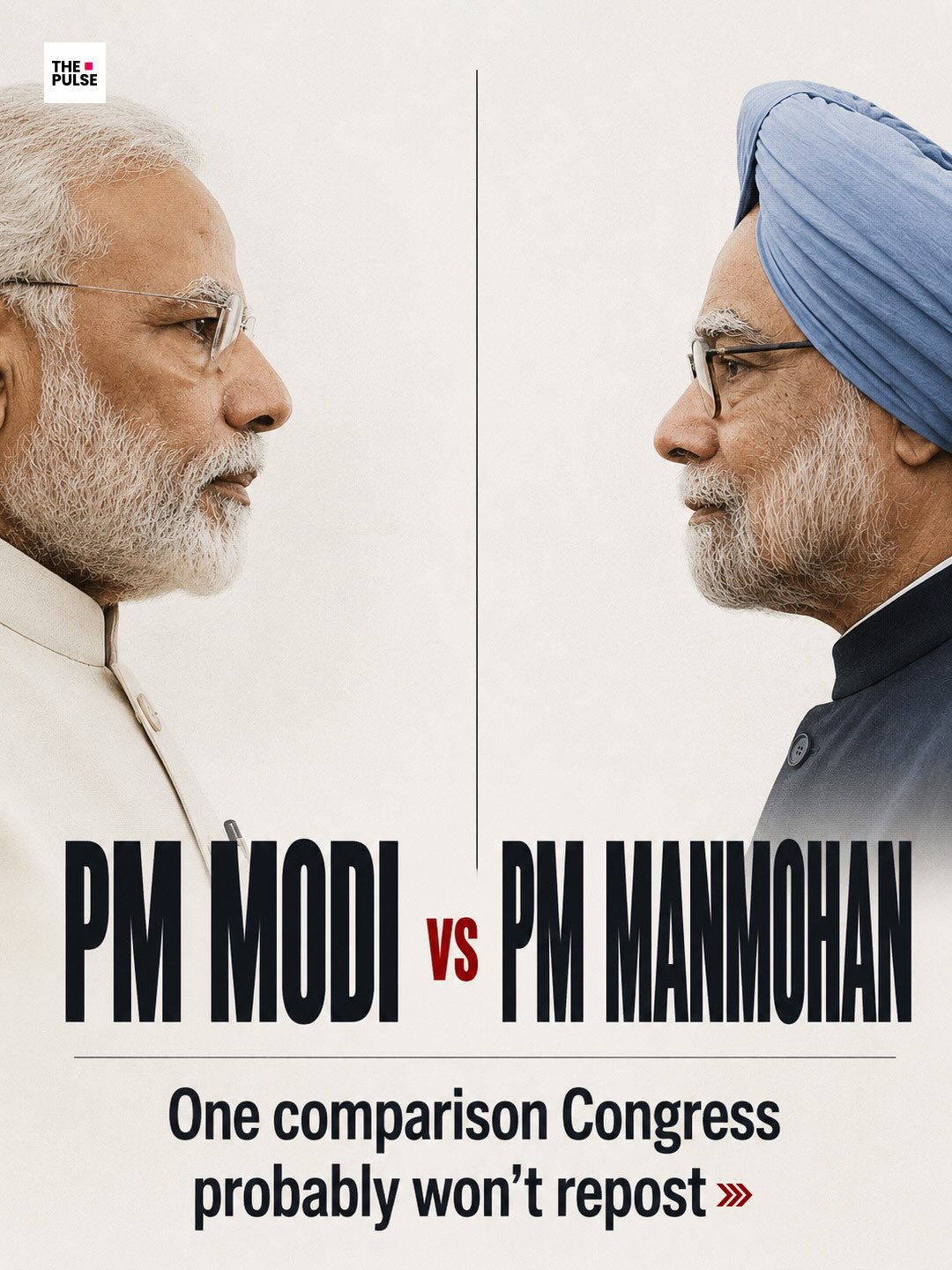
Claims
2 exaggerated · 2 true · 4 unchecked
- True, but exaggerated
Under Manmohan Singh the economy had high inflation, stressed banks, policy paralysis and major corruption controversies.
What's actually true
Several sources document high inflation, policy paralysis, stressed banks with high NPAs, and major corruption scandals under UPA.
- True
Under Manmohan Singh the Indian economy experienced high inflation, stressed banks, policy paralysis, and major corruption controversies.
What's actually true
Several sources document high inflation, policy paralysis, stressed banks with high NPAs, and major corruption scandals under UPA.
- Couldn't check
Under PM Modi the economy has stronger balance sheets, higher capex and faster growth.
What's actually true
Reduced NPAs, GDP growth of 7.4-7.6 percent, and steps to strengthen the economy.
- True
Under the UPA years there was policy paralysis and major corruption controversies.
What's actually true
Policy paralysis and corruption scandals dominated UPA years with GDP growth at 4.6 percent.
- Couldn't check
India's economy under UPA needed a reset.
What's actually true
Sources describe problems but no source states the economy needed a reset.
- Couldn't check
Manmohan Singh left an economy under pressure.
What's actually true
UPA left banking crisis, high NPAs at 12.3 percent, and GDP growth down to 4.6 percent.
- True, but exaggerated
PM Modi is building an economy with global weight.
What's actually true
India became fastest growing major economy and fifth largest, but global weight is interpretive wording.
- Couldn't check
India didn't just grow. Its economic fundamentals changed.
What's actually true
We couldn't verify this claim with a reliable source. Sources show growth and NPA improvements but none address whether economic fundamentals changed.
The full story, from the sources›
CPI (new-series) inflation declining from 10.21 per cent during FY 2013-14 to about 9.49 per cent in 2013-14. Food inflation, however, remained stubbornly high during FY 2013-14, reaching a peak of 11.95% in third quarter. - Press Information Bureau (2014-07-09) Most recent value (2025) 7.6 for GDP growth (annual %). - World Bank Open Data (2025) GDP growth (annual %) series shows acceleration to 6.4% in 2013 from 5.5% prior. - World Bank Open Data (2025) Gross non-performing assets (NPAs) of public sector banks have been declining during the last five financial years. The NPAs have reduced from 9.11% to 2.58% from March 2021 to 31 March 2025. - Press Information Bureau (2025-07-22) reaffirming India’s position as the worlds fastest-growing major economy. - The Times of India (2025-07-29)
From primary sources
What else it leaves out (1)›
- No source confirms economy needed a reset
How it's framed (3)›
Sources (10)›
The report card reflects both what the country is capable of achieving and how the opportunity was lost as corruption and a policy paralysis brought the GDP growth rate crashing to its slowest pace of 4.6 per cent for the decade. While stubbornly high inflation has kept household budgets under strain
White paper blames UPA for a banking crisis and political interference in lending decisions. Gross NPA ratio climbed due to pressure on public sector banks.
CPI (new-series) inflation declining from 10.21 per cent during FY 2013-14 to about 9.49 per cent in 2013-14. Food inflation, however, remained stubbornly high during FY 2013-14, reaching a peak of 11.95% in third quarter.
Most recent value (2025) 7.6 for GDP growth (annual %)
INDIAS GDP GROWTH FOR FY26 IS ESTIMATED AT 7.4 PER CENT
Gross non-performing assets (NPAs) of public sector banks have been declining during the last five financial years. The NPAs have reduced from 9.11% to 2.58% from March 2021 to 31 March 2025.
reaffirming India’s position as the worlds fastest-growing major economy
Ruling partys economic success is overshadowed by brazen acts of corruption and ineffective governance.
GDP growth (annual %) series shows acceleration to 6.4% in 2013 from 5.5% prior
Singh, who held the top post for two consecutive terms between 2004 and 2014, was seen as an architect of India's economic liberalisation which changed the countrys growth trajectory.
Notes on this check (10)›
- Unavailable: video media
- Unavailable: audio track (photo/carousel)
- No speech transcript - analysis rests on caption, on-screen text, and frames.
- The reel's central point holds up; the report's objection is that it is put more strongly than the sources put it.
- Dropped 2 support citation(s) for "Under Manmohan Singh the economy had high inflation, stre…" because the cited passages do not address the claim directly.
- Dropped 2 support citation(s) for "Under Manmohan Singh the Indian economy experienced high …" because the cited passages do not address the claim directly.
- Dropped 5 support citation(s) for "Under PM Modi the economy has stronger balance sheets, hi…" because the cited passages do not address the claim directly.
- Dropped 1 support citation(s) for "Under the UPA years there was policy paralysis and major …" because the cited passages do not address the claim directly.
- Dropped 2 support citation(s) for "Manmohan Singh left an economy under pressure." because the cited passages do not address the claim directly.
- Dropped 1 support citation(s) for "PM Modi is building an economy with global weight." because the cited passages do not address the claim directly.
Checked against 2 sources · 16 Aug 2026
Help us improve
Was this analysis useful?
One tap helps us find what Blindspot should improve next.