Endomorphs gain weight easily with wider frames, but the reel invents fat-cell insulin sensitivity and unproven diet rules as the cause.
- Wrong: Endomorphs have higher insulin sensitivity in fat cells; sources link fat cells to insulin resistance instead.
- No record found: Carb timing matters more for endomorphs and extreme low-calorie diets cause famine-like fat retention unique to them.
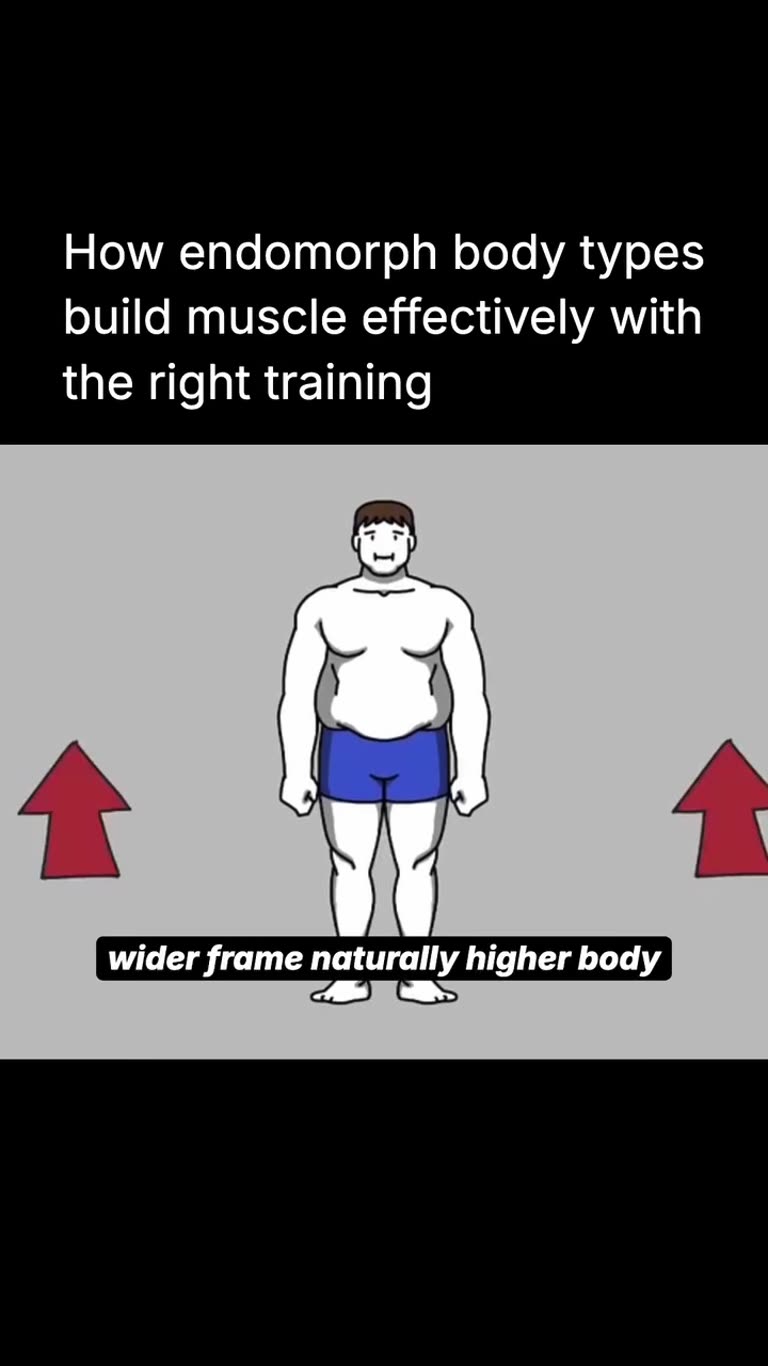
- True: Endomorphs gain weight easily and have wider frames with higher body fat.
Checked against: medicalnewstoday.com, puregym.com, WebMD, wikiHow, Tua Saúde, idp.nature.com, link.springer.com, Evidence-Based Nutrition, Recipes, Personalized Meal Plans, EverydayHealth.com, Dr. Berg, Oreate AI
Why we say that›
Endomorph advice rests on contradicted insulin claim and unsettled tactics.
Supported facts on weight gain and training hold. The mechanism of higher fat-cell insulin sensitivity is contradicted and many specific rules lack evidence.
Weight gain tendency and muscle potential are real. No source shows elevated fat-cell insulin sensitivity or proves the claimed diet rules are uniquely required.
Reported 22 Oct 2026
How the reel gets there
The reel says: “Carb timing matters more for you than other body types.”
The record shows: rearranging carbs around workouts produces no measurable body-composition advantage when daily protein and carb totals are met
Evidence-Based Nutrition, Recipes, Personalized Meal Plans
Claims
1 false · 9 true · 16 no record
- False
Endomorphs tend to have higher insulin sensitivity in fat cells, meaning their body is very efficient at storing energy.
What we found
Two sources link fat-cell hypertrophy to higher insulin resistance, not sensitivity. Visceral fat related to insulin resistance. No source establishes elevated fat-cell insulin sensitivity for endomorphs.
- True
Endomorphs gain weight easily.
What we found
Endomorphs find it easy to gain weight, according to WebMD and PureGym.
- True
Endomorphs have a wider frame and naturally higher body fat.
- True
Endomorphs' body is primed for growth and has the hormonal profile and the frame to carry serious muscle mass.
What we found
Endomorphs put on muscles easily with proper training and have lots of body fat and muscle. They can easily put on muscle mass.
- True
When endomorphs go on extreme low calorie diets, their metabolism crashes.
What we found
Slower metabolism in endomorphs. General metabolic adaptation in deficit is established in cited literature though not endomorph-exclusive.
- True
The more muscle an endomorph carries, the higher their resting metabolic rate becomes.
What we found
One source directly links higher muscle mass in endomorphs to increased resting metabolic rate.
- True
Fat is calorie dense at nine calories per gram, so portions matter.
What we found
One source implies calorie awareness via portion control and watching calories. Standard nutrition fact.
- True
A balanced diet with portion control, combined with regular resistance training and short sessions of low intensity cardio, can help endomorphs achieve their fitness goals and improve their overall metabolism.
What we found
One source recommends controlling what/when/how much they eat, compound exercises, walking two to three times per week. Two sources support diet and mixed training for endomorphs.
- True
Endomorphs gain fat faster than other body types even on the same diet.
What we found
Endomorphs gain weight easily. Higher fat accumulation tendencies and slower metabolism.
- True
What actually works for endomorphs is a moderate calorie deficit, high protein to preserve muscle, and resistance training as the primary exercise, not hours of cardio.
What we found
Two sources recommend controlling calories and mix of strength training with limited cardio. General evidence-based advice aligns.
+16 smaller points we found no record of›
- No record found
The problem for endomorphs is that muscle is usually hidden under a layer of fat that won't go away because their nutrition strategy is wrong.
What we found
One source repeats the phrasing but no primary source confirms the causal link to wrong nutrition strategy as a defining endomorph issue.
- No record found
The biggest mistake endomorphs make is going on extreme low calorie diets, thinking they need to starve the fat off.
What we found
One source references general advice against extreme diets due to metabolic risks but no source isolates this as the biggest or unique mistake for endomorphs.
- No record found
When endomorphs go on extreme low calorie diets, their body holds onto fat even harder because it thinks there's a famine.
What we found
Whether extreme low-calorie diets cause endomorphs to hold fat harder due to perceived famine remains unsettled.
- No record found
Muscle is metabolically active tissue; it burns calories at rest.
What we found
Whether muscle burns calories at rest in endomorphs remains unsettled.
- No record found
Carb timing matters more for endomorphs than other body types.
What we found
Whether carb timing matters more for endomorphs than other body types remains unsettled.
- No record found
Endomorphs should keep carbs around workouts when muscles are most insulin sensitive and can actually use them; lower carb the rest of the time.
What we found
Two sources mention carb awareness or timing in popular guides but no high-quality source establishes this as uniquely crucial or more important for endomorphs.
- No record found
Endomorphs should not avoid fats because their hormones need them.
What we found
Whether endomorphs specifically need dietary fats for hormones remains unsettled.
- No record found
Endomorphs should train four to five times a week with a mix of heavy compound lifts and moderate hypertrophy work.
What we found
Whether endomorphs should train four to five times weekly with heavy compounds and hypertrophy work remains unsettled.
- No record found
Endomorphs should add two to three short sessions of low intensity cardio like walking, not marathon sessions on the treadmill that just make you hungrier.
What we found
Whether endomorphs should add two to three short low-intensity cardio sessions remains unsettled.
- No record found
In the past, higher insulin sensitivity in fat cells would have been beneficial when food was scarce, but in modern times it can lead to faster fat gain.
What we found
Two sources reference thrifty genotype or efficient storage as survival mechanism now a liability, but no source ties this specifically to endomorph fat-cell insulin sensitivity.
- No record found
This approach helps preserve muscle mass and increases resting metabolic rate, which is essential for burning calories at rest.
What we found
Whether preserving muscle raises resting metabolic rate in endomorphs remains unsettled.
- No record found
Carb timing is crucial, with carbohydrates being consumed around workouts when muscles are most insulin sensitive.
What we found
One source mentions strategic carb timing in popular guides. One source contradicts measurable advantage when totals controlled.
- No record found
Endomorphs build muscle really well.
- No record found
Endomorphs look at a pizza and their body stores it.
What we found
Tendency to gain weight or fat easily but no source establishes the specific pizza example or extreme phrasing.
- No record found
Endomorphs have probably spent most of their life feeling like their metabolism is working against them.
What we found
Slower metabolism and difficulty with weight loss but no source documents personal life experience or feelings.
- No record found
Endomorphs should add two to three short sessions of low intensity cardio like walking.
What we found
Whether endomorphs should add two to three short low-intensity cardio sessions remains unsettled.
The full story, from the sources›
insulin resistance was associated with a higher ratio of small to large cells. - link.springer.com (2007-06-05) subjects with hypertrophy displayed significantly higher fasting plasma insulin and HOMA IR values than subjects with hyperplasia... despite similar total fat mass. - idp.nature.com (2015-02-10) If you have the endomorph body type, you know its easy to gain weight but hard to lose it. - WebMD people with endomorphic bodies may need to more carefully control what they eat, when they eat, and how much they eat. - medicalnewstoday.com (2019-06-27) Endomorphs tend to have a larger bone structure and are curvier... excess fat often deposits around the waist... visceral body fat... related to insulin resistance. - EverydayHealth.com (2019-11-20)
From primary sources · reporting
How it's framed (4)›
Sources (11)›
people with endomorphic bodies may need to more carefully control what they eat, when they eat, and how much they eat
endomorphs may find they gain weight more easily... may need to be more diligent with their diet and exercise routines to see changes
If you have the endomorph body type, you know its easy to gain weight but hard to lose it
Fat is calorie dense at nine calories per gram" is not stated; "portion control" and calorie awareness are implied via keep a closer watch on calories
Endomorphs were characterized as having rounder, softer bodies with higher fat storage, wider waists, and shorter limbs... greater carbohydrate sensitivity, and higher fat accumulation tendencies
subjects with hypertrophy displayed significantly higher fasting plasma insulin and HOMA IR values than subjects with hyperplasia... despite similar total fat mass
insulin resistance was associated with a higher ratio of small to large cells
rearranging carbs around workouts produces no measurable body-composition advantage when daily protein and carb totals are met
Endomorphs tend to have a larger bone structure and are curvier... excess fat often deposits around the waist... visceral body fat... related to insulin resistance
endomorph body types often struggle with weight loss due to a naturally slower metabolism and a greater tendency to store fat
In environments where food sources were scarce... the ability to store energy efficiently as fat was a survival mechanism. In the modern world of caloric abundance, this once-beneficial trait has become a liability
Notes on this check (1)›
- Some spoken passages were excluded because their transcription was uncertain; those assertions were not checked.
Checked against 11 sources · 22 Oct 2026
Help us improve
Was this analysis useful?
One tap helps us find what Blindspot should improve next.