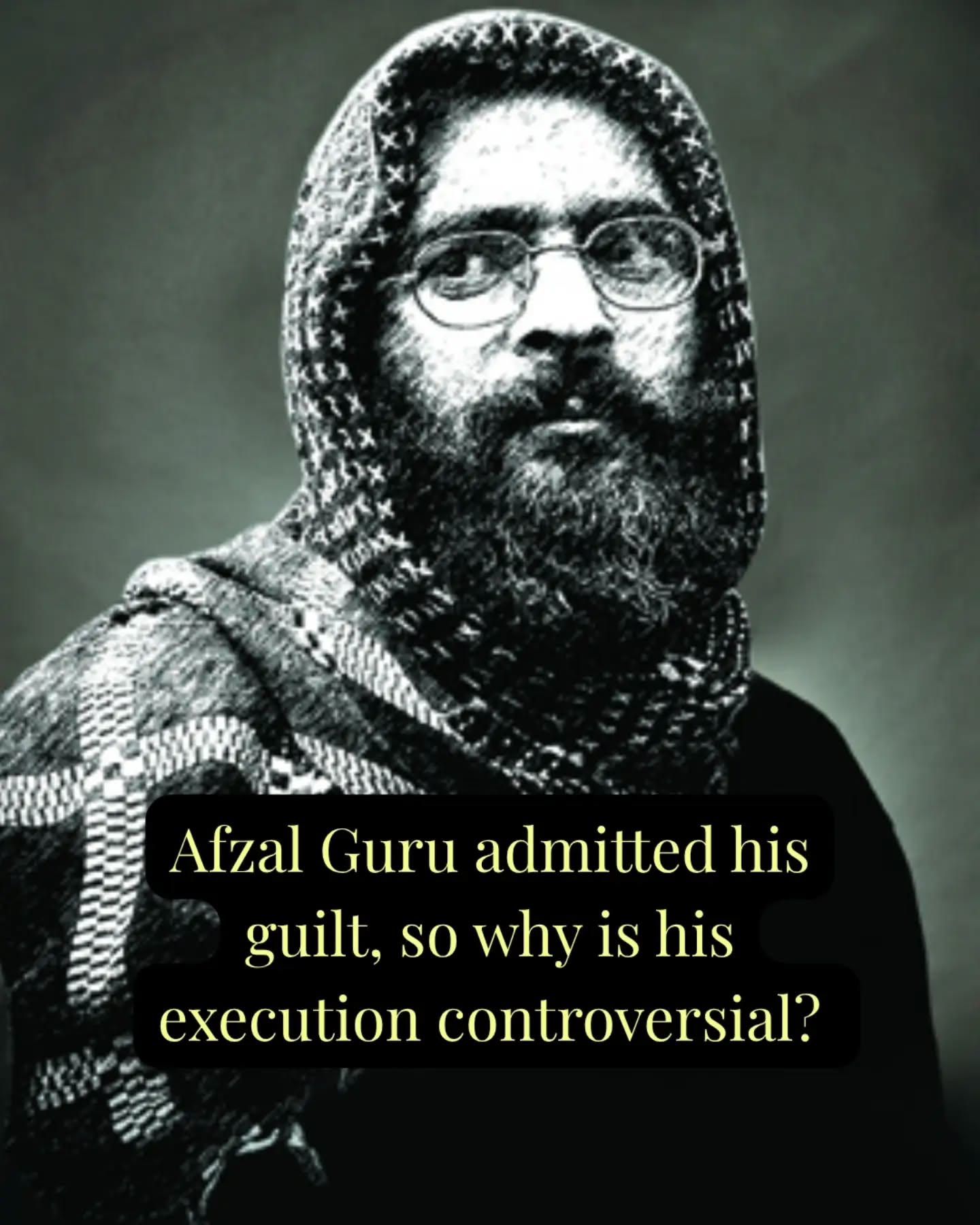
Afzal Guru later disowned any confession. The Supreme Court rejected it as evidence, yet this reel presents it as undisputed guilt to dismiss all controversy.
Why we say that›
Afzal Guru disowned his confession. Supreme Court rejected it as evidence.
The on-screen claim that Afzal Guru admitted his guilt is false. He disowned the custodial confession after seven months and the Supreme Court ruled it could not be used against him due to procedural violations. The reel builds its rhetorical question on this rejected claim, making the controversy seem unreasonable when the court itself found the evidence flawed.
Guru disowned the confession after seven months. The Supreme Court explicitly did not accept it as evidence against him due to procedural lapses.
The reel omits that Afzal Guru disowned the custodial confession after seven months.
Reported 8 Aug 2026
Claims
1 unchecked
- Couldn't check
Afzal Guru admitted his guilt
What's actually true
Guru disowned the confession after seven months. The Supreme Court did not accept it as evidence against him because of procedural violations.
The full story, from the sources›
However, after seven months, Guru disowned this confession and the Supreme Court did not accept the earlier confession as evidence against him. - en.wikipedia.org (2005-08-10) Mohammed Afzal Guru was sentenced to death in December 2002 after being convicted of conspiracy to attack the Parliament of India... - Amnesty International (2013-02-09) Based only on Guru's custodial confession (which the supreme court subsequently set aside, citing 'lapses' and 'violations of procedural safeguards). - the Guardian (2013-02-10) Police made me a scapegoat ... I was entrapped into the case by Special Task Force (STF) of Kashmir and implicated by Delhi Police Special Cell, Afzal said. - caravanmagazine.in (2020-01-15)
From reporting
What else it leaves out (2)›
- It hides that the Supreme Court set aside the confession citing lapses and violations of procedural safeguards and did not use it as evidence.
- The controversy stems from fair-trial concerns, including the quality of evidence and the rushed execution process, which the reel dismisses with a false premise.
How it's framed (2)›
Sources (4)›
However, after seven months, Guru disowned this confession and the Supreme Court did not accept the earlier confession as evidence against him.
Based only on Guru's custodial confession (which the supreme court subsequently set aside, citing 'lapses' and 'violations of procedural safeguards)
Police made me a scapegoat ... I was entrapped into the case by Special Task Force (STF) of Kashmir and implicated by Delhi Police Special Cell, Afzal said.
Mohammed Afzal Guru was sentenced to death in December 2002 after being convicted of conspiracy to attack the Parliament of India...
Notes on this check (3)›
- No speech transcript - analysis rests on on-screen text and frames.
- No external corroborating evidence beyond the provided sources.
- Dropped contradiction citations for "Afzal Guru admitted his guilt" because the cited passages do not address the claim directly.
Checked against 4 sources · 8 Aug 2026
Help us improve
Was this analysis useful?
One tap helps us find what Blindspot should improve next.